Cable Tie About
How It Works
- Edge Clips: Feature an integrated metal or plastic clip with barbs that push or hammer onto the exposed edge of a sheet metal panel, gripping the material firmly.
- Clinching Mounts: Feature a symmetrical rectangular base that locks into a punched hole in the sheet metal, holding a horizontal slot for a standard zip tie. [1]
- Self-Locking Strap: The flexible plastic or stainless steel strap threads through the head to create a permanent or releasable loop. [1, 2]
- Material: Typically constructed from UV-stabilized Nylon 66 or durable stainless steel cable ties.
- Application: Ideal for automotive chassis, home appliances, and electrical cabinets where routing wires along flat metal panels is required.
- Temperature Range: Standard nylon variants handle 40C to 85C, while heavy-duty metal versions withstand extreme heat up to 500C. [1, 2, 3, 4]
If you're looking for a specific part or installation, tell me:
- Is the sheet metal edged or does it have a pre-drilled hole?
- What is the thickness of the sheet metal?
- Are you looking for plastic or metal?
Extreme Temperature and Corrosion ResistanceThese stainless steel cable ties are specifically designed for harsh and challenging environments, tolerating temperatures from -80C to +538C. Superior corrosion, UV, and fire resistance make them suitable for use in marine industries, electrical installations, and outdoor settings exposed to demanding weather or chemical exposure.
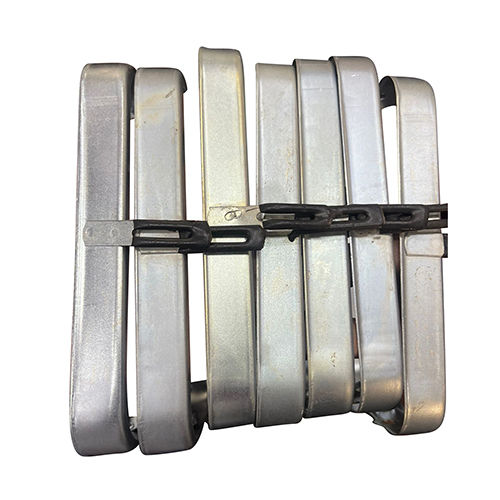
Precision Engineering for Secure BundlingProduced through precision stamping and forming, each cable tie delivers reliable strength with a polished, smooth surface. The flat band loop and self-locking ball-lock mechanism ensure a secure hold on cables, wires, or pipes, supporting heavy-duty bundling with high tensile strength. No external mounting or holes are needed for installation.
Sustainable and Versatile SolutionThese cable ties are reusable and recyclable, supporting eco-friendly operations. Their lightweight, yet robust stainless steel design makes them suitable for a broad range of installations, providing flexibility and sustainability for contractors, manufacturers, and facility managers alike.
FAQ's of Cable Tie:
Q: How are these stainless steel cable ties installed?
A: You can install these cable ties either manually or using standard cable tie installation tools. The self-locking ball-lock mechanism allows for quick and secure fastening without the need for additional mounting hardware.
Q: What environments are best suited for this cable tie?
A: This cable tie is ideal for electric, marine, utility, and industrial environments, especially where exposure to corrosion, UV, or high temperatures is expected. Its construction from 304 or 316 grade stainless steel ensures reliable performance even in aggressive or outdoor conditions.
Q: When should I choose stainless steel cable ties over plastic ones?
A: Choose these cable ties when you need superior temperature tolerance, fire resistance, UV and corrosion resistance, or require high tensile strength for heavy-duty bundling. They are especially recommended for industrial and marine use where durability is critical.
Q: What is the process by which these cable ties are manufactured?
A: Each tie is manufactured using precision stamping and forming from annealed, soft stainless steel. The process results in a smooth, polished finish and ensures consistent strength and high quality, conforming to industrial standards such as RoHS and ISO 9001.
Q: Where can I use these cable ties?
A: You can use these cable ties for binding, bundling, and securing cables, pipes, and wires in various settings, including outdoor installations, marine vessel equipment, electrical panels, industrial machinery, and utility infrastructures.
Q: What are the benefits of using this type of cable tie?
A: Benefits include outstanding resistance to heat, fire, corrosion, and UV exposure, as well as a reusable, recyclable design that supports sustainability. The ball-lock mechanism simplifies installation and offers a strong, reliable grip for heavy-duty tasks.
Q: How do I determine the correct size and weight for my application?
A: Select from various lengths and weights (ranging from 3 to 15 grams per piece) based on the bundle diameter and load requirements. The width is approximately 4.6 mm, with thickness varying from 0.25 mm to 0.5 mm to suit different industrial needs.








 Send Inquiry


 Send Inquiry

